Human-Centered Research + Design
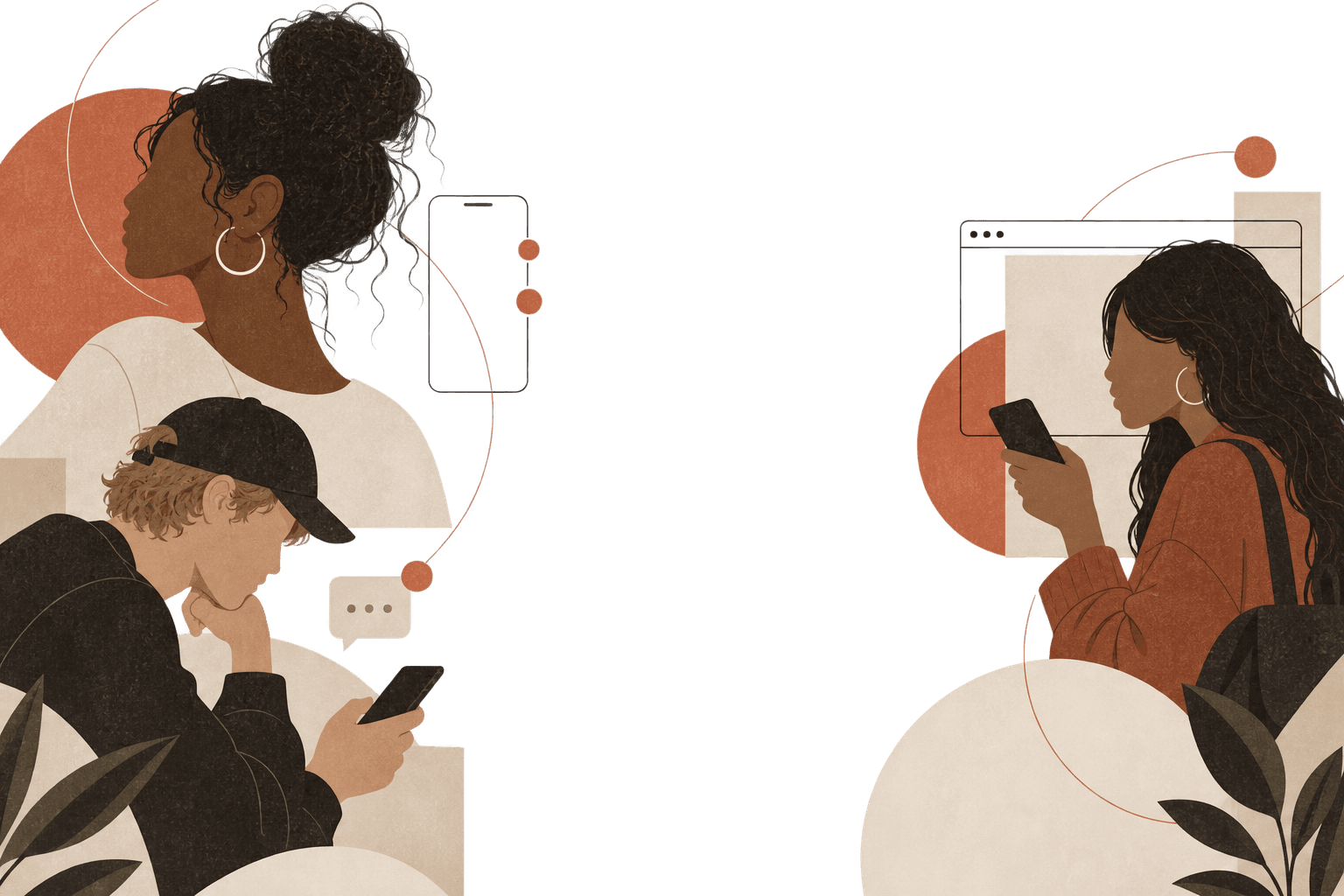
Studying how people think, behave, and live — then using what we learn to design better products, services, and experiences.
01 — The evidence
We don’t design from assumptions. We study what people actually do.
- F.01
Strong intentions don’t always translate into equally strong behavior change.
Across 47 experimental tests, interventions changed intentions more strongly than they changed actual behavior.
Webb & Sheeran, 2006Psychological Bulletin - F.02
Changing the default changed what people did.
When enrollment became automatic rather than opt-in, 401(k) participation increased from 49% to 86%.
Madrian & Shea, 2001The Quarterly Journal of Economics - F.03TimeExperience
The same amount of technology use can represent very different experiences.
Two people can spend the same amount of time online while doing completely different things, in different contexts, with different effects.
02 — Two doors into Chyless World
Two doors into Chyless World
Chyless World Studio
Organizations bring us problems.
We investigate what’s happening, understand people’s experience and behavior, find what’s getting in the way, then design better products, services, and experiences.
Enter StudioChyless World Labs
We investigate what’s next.
We investigate questions about people, technology, and the conditions shaping human life — then turn what we learn into experiments, concepts, and prototypes.
Enter Labs03 — How we think
We don’t start with solutions.
- 01UnderstandWhat’s actually happening, and why.
- 02FrameWhat the real opportunity is.
- 03DesignWhat understanding becomes.
- 04TestWhether it holds up in practice.
- 05LearnWhat to carry forward.
04 — Chyless World Labs
Current Design Study
Digital well-being
- Observation
- Research
- Interpretation
- Design
- Artifact
The question
How can we live well with technology — so that it works for us, rather than against us?
01Research
Digital well-being is more complicated than screen time.
Benefits and drawbacks can coexist. What matters includes how technology is used, why it is used, and under what conditions.
02Interpretation
Yet the advice often sounds remarkably simple.
Use your phone less. Set limits. Stop scrolling. Have more self-control.
03Design response
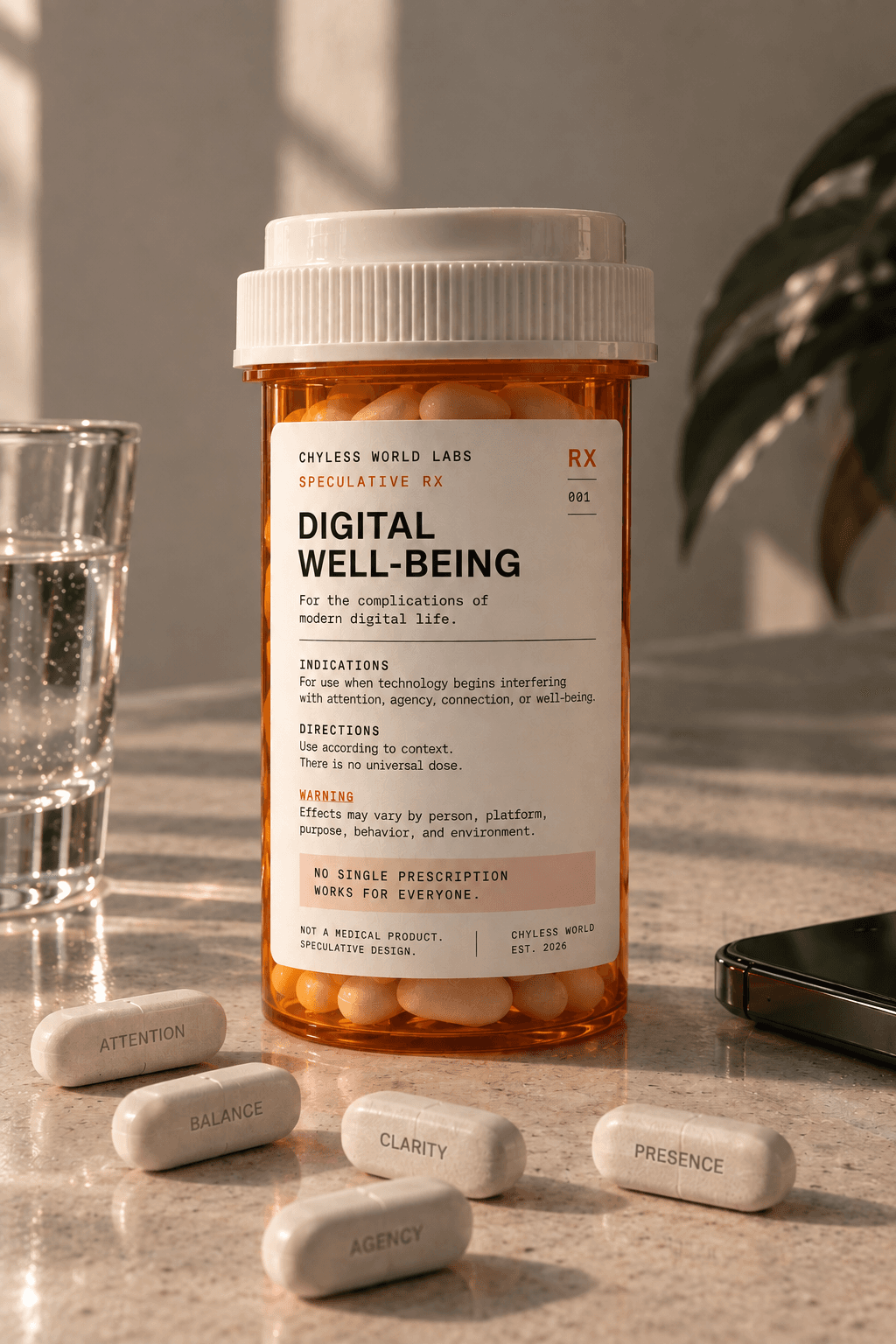
So we made a prescription.
A speculative treatment for the complications of modern digital life.
05 — Credibility
Chyanne Robbins
A researcher and designer working across human-centered design, behavioral science, technology, and public health.
- Degrees
- Master of Public Health — Health Promotion & Disease Prevention
- B.A. Communication Studies
- Continuing study
- Behavioral Science + Human-Centered Design — Duke University
- Software Engineering — General Assembly
- Practice
- Research
- Design
Our work is best suited to organizations that value human outcomes as a design constraint—not an afterthought.
- Established & growing organizations
- Founder-led companies
- Funded teams & institutions
- Public-facing & community systems